
The Short Answer: When to Visit Glacier National Park
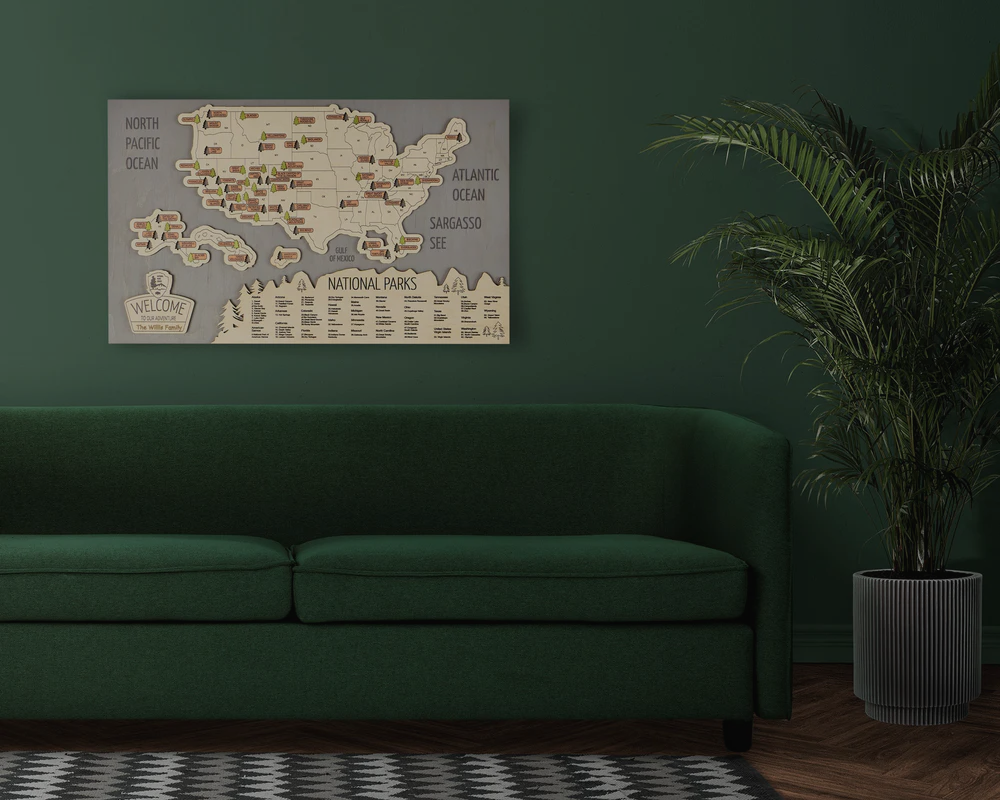
The best time to visit Glacier National Park is mid-July through early September, when the Going-to-the-Sun Road is fully open, hiking trails are clear of snow, and every visitor center, lodge, and shuttle service is running. If you want a quieter trip and don't mind a bit of unpredictability, late June and September are the best compromise – fewer crowds, lower prices, and still (mostly) full access to the park. Once you've picked your dates, a wooden national parks map makes it easy to mark Glacier alongside every other park on your list.
Outside that window, from October through May, Glacier turns into a very different destination: cold, quiet, and only partially accessible. That's not necessarily bad – it just isn't what most first-time visitors are picturing when they plan a trip. Everything below explains exactly why this window exists, what changes month to month, and how to decide between "peaceful" and "fully open."
Why the Window Is So Narrow: The Going-to-the-Sun Road
Glacier's short travel season isn't a marketing suggestion – it comes down to one road. The Going-to-the-Sun Road is the only route that crosses the park east to west over Logan Pass, and it's the single biggest factor in when the park actually feels "open."
Crews typically start plowing in April, but because Logan Pass sits at nearly 6,650 feet, snowdrifts there can reach 20-80 feet deep. Full opening usually happens somewhere between mid-June and mid-July, and in heavy-snow years it can slip into late July. The road closes for the season around mid-to-late October, though an early snowstorm can shut it down without much warning.
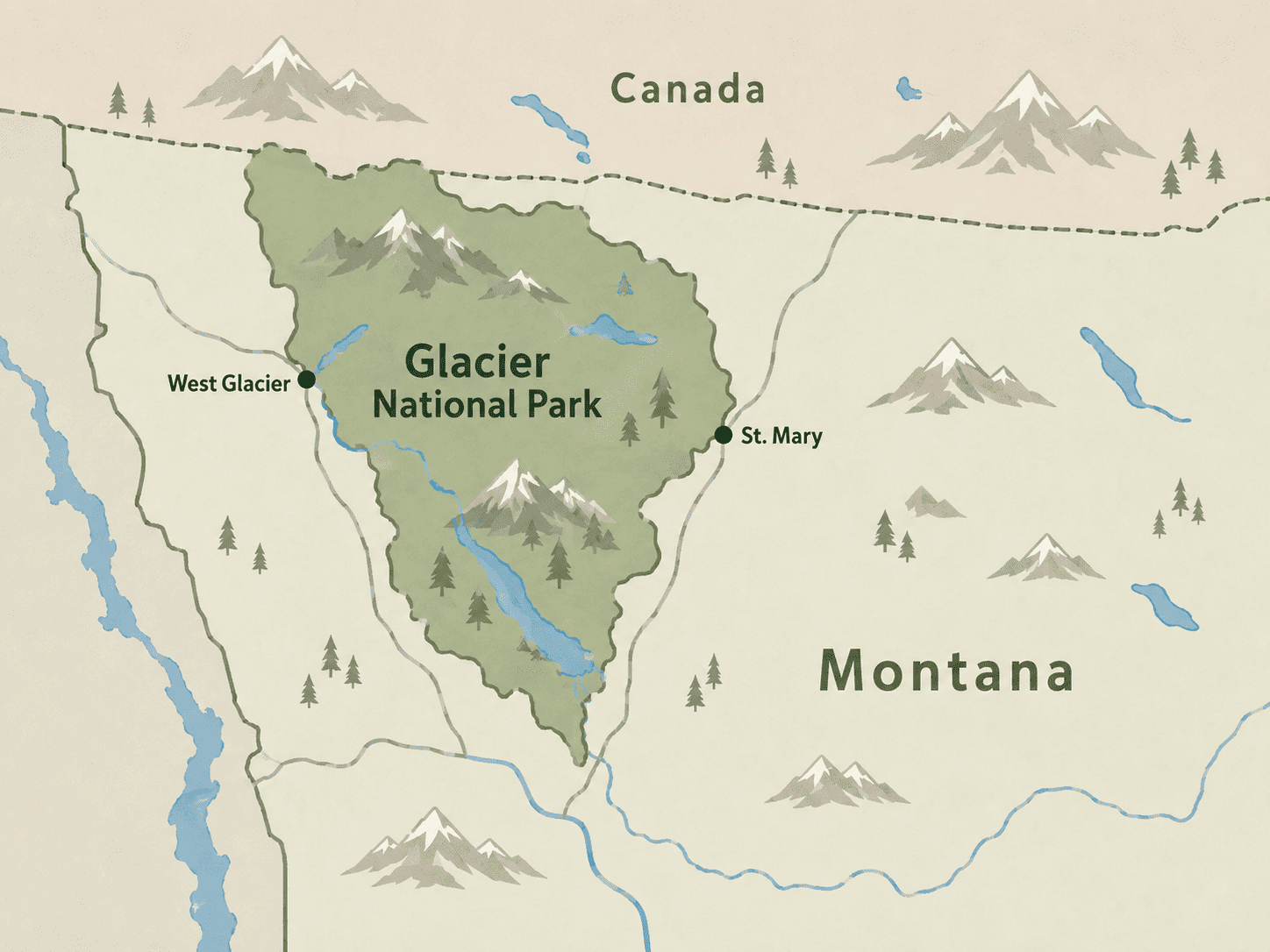
Until the road is fully open, you can still drive in from either end – West Glacier or St. Mary – but you won't be able to cross the park, and Logan Pass Visitor Center and the alpine trails around it stay inaccessible. This is the single biggest reason May and early June don't make the "best time" list even though the weather is often pleasant at lower elevations: the park's signature drive and its most iconic viewpoints simply aren't reachable yet.

Season by Month: What Each Month Actually Looks Like
Once you understand the road, the month-by-month picture makes a lot more sense.
May – Lower valleys are green and lakes are ice-free, but Going-to-the-Sun Road is closed above Avalanche Creek on the west side and above St. Mary on the east. Good for lower-elevation hikes and photography, not for the full park experience.
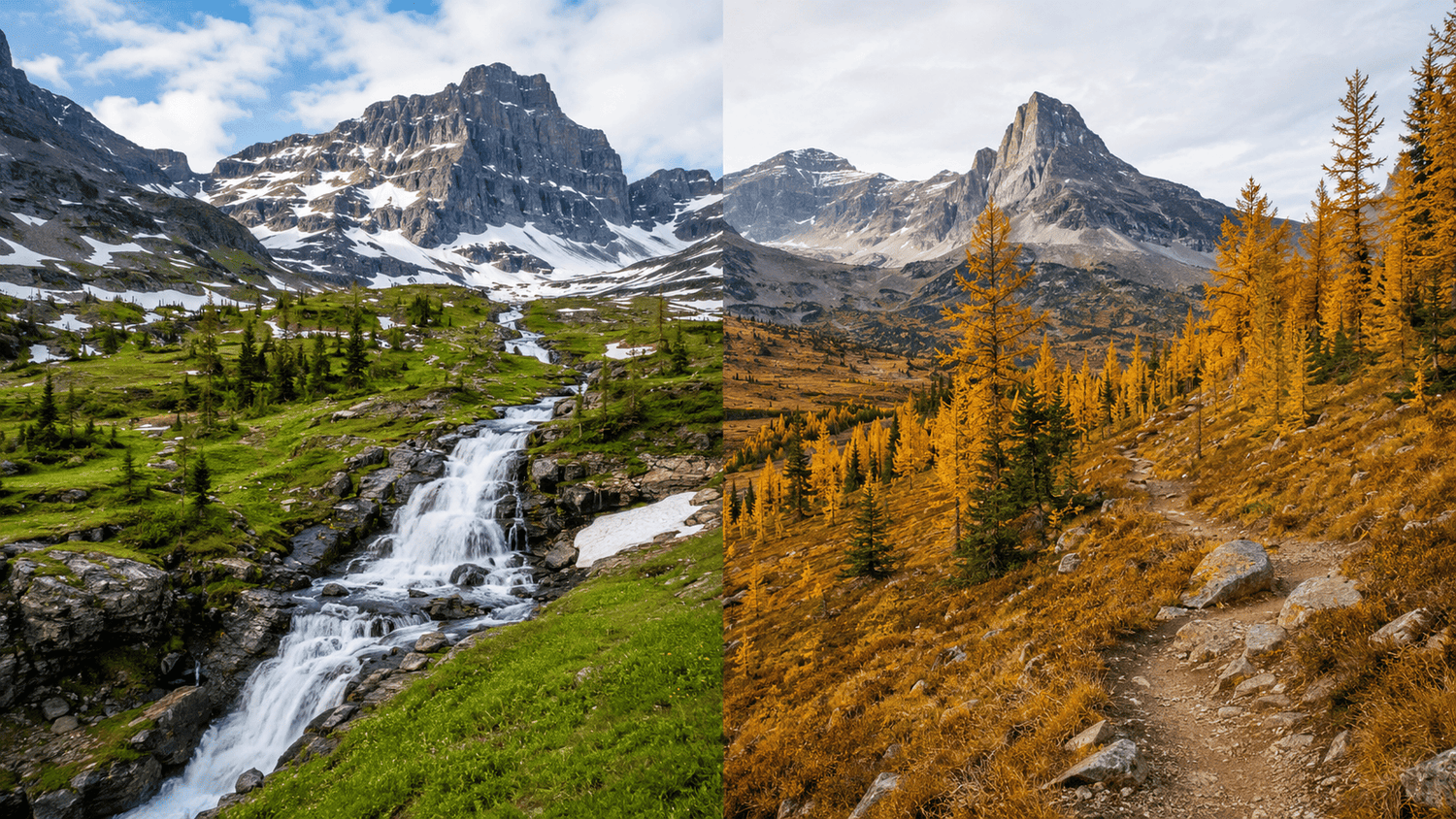
June – Snow is melting fast and waterfalls are at their most dramatic, but the road often doesn't fully open until late in the month. Trails above 6,000 feet can still hold snow into early July. Unpredictable, but rewarding if timing lines up.
July – The road is (almost always) fully open, every trail is accessible, and services are running at full capacity. This is peak conditions and peak crowds at the same time.
August – Similar to July: warm, dry, everything open. Wildfire smoke becomes a real possibility this month and can affect visibility and air quality, so it's worth checking conditions close to your trip.
September – Days are still warm, nights turn cold, and crowds thin out noticeably after Labor Day. Early snow is possible by late September, and some services (shuttles, certain lodges) start reducing hours.
October – Going-to-the-Sun Road typically closes by mid-month, sometimes earlier if a storm hits. Most visitor services shut down for the season. The park is still open and driveable at the edges, but this is effectively the tail end of the season, not a realistic "best time" pick. If your trip includes more than one stop this year, the landscape-format national parks map is a nice way to track the whole route as you go.
Peak Season vs. Shoulder Season: Crowds, Prices, and Trade-offs
Once you've picked a rough window, the next decision is where inside that window to land – and that comes down to a straightforward trade-off between full access and fewer people.
July and August (peak season) deliver the most reliable weather and complete access to every road, trail, and visitor center – but also the most competition for it. Going-to-the-Sun Road parking lots at Logan Pass and Avalanche Creek routinely fill by mid-morning. If you're driving your own vehicle during peak hours, expect to need the park's vehicle reservation system for the road corridor, and expect popular trailheads to be genuinely crowded by 9 or 10 a.m.
Late June and September (shoulder season) trade some of that certainty for breathing room. Trails are noticeably quieter, lodges are easier to book, and you won't be jockeying for a parking spot at sunrise. The cost is real, though: late June carries a chance of lingering snow and a road that isn't fully open yet, while September brings a growing risk of early cold snaps and reduced services as the month goes on.
There's no universally "worst" time inside the main season – it depends on what you're optimizing for. But outside it, the trade-off disappears: May, October, and winter aren't a quieter version of the same trip, they're a genuinely different, more limited one (more on that below).
If avoiding crowds is your main priority, the most reliable move isn't picking a different month at all – it's picking early mornings or early evenings within your chosen month, since the middle of the day is consistently the busiest window regardless of season.
Timing It to Nature: Wildflowers, Wildlife, and Waterfalls
Beyond weather and crowd size, the calendar also decides what you'll actually see – and this is where visits inside the same "best time" window can look completely different from each other.
Waterfalls peak in June, driven by snowmelt runoff. By August, many of the smaller falls have slowed to a trickle, so if dramatic waterfall photography is the goal, an earlier trip (accepting the road-access trade-off from the sections above) is worth it.
Wildflowers peak later, typically in July, when alpine meadows around Logan Pass and Hidden Lake Overlook fill with beargrass, glacier lilies, and Indian paintbrush. Timing shifts slightly year to year depending on snowmelt, but mid-to-late July is a reliable target.
Wildlife viewing is best in the early morning or evening throughout the season, but activity noticeably increases in September, as animals feed heavily ahead of winter. Cooler temperatures also push wildlife to lower, more visible elevations. This is one of the strongest arguments for a September trip specifically, independent of the crowd-avoidance case made above.

Should You Visit in Winter or the Off-Season?
If your dates fall outside the main window, it's worth being honest about what you're actually signing up for, rather than treating it as a quieter version of a summer trip.
Glacier National Park is open year-round – the park itself never closes – but from roughly November through April, the experience changes substantially. Going-to-the-Sun Road is closed beyond the plowed sections near each entrance, most lodges and visitor centers are closed for the season, and shuttle service doesn't run. What remains accessible is mainly the area around West Glacier and Lake McDonald, along with winter activities like snowshoeing and cross-country skiing on unplowed park roads.
This can be a genuinely good trip for the right traveler: someone who wants solitude, snow-covered scenery, and doesn't need to see Logan Pass or cross the Continental Divide. It's a poor fit for a first-time visitor whose goal is the classic Glacier experience – the alpine road, the high-country trails, the postcard views – since almost all of that infrastructure is closed. If that's your goal, the honest advice is to shift your dates into the main season rather than try to make an off-season trip work around it.

Hinterlasse einen Kommentar
Diese Website ist durch hCaptcha geschützt und es gelten die allgemeinen Geschäftsbedingungen und Datenschutzbestimmungen von hCaptcha.